Browse

Latest Headlines

Fresh headlines, crisp visuals — faster reading.

Michel Siffre spent 63 days without clocks—and thought a month remained New

Michel Siffre spent 63 days without clocks—and thought a month remained

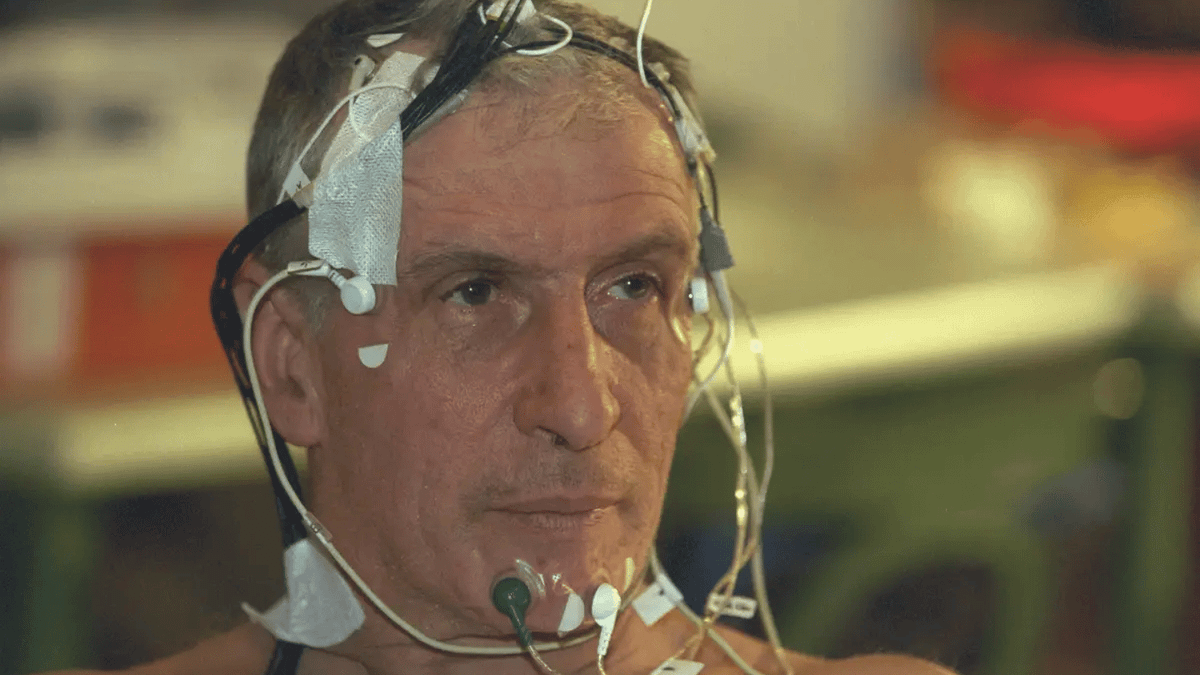
Updated 17:26 10 Oct 2026 GMT+1Published 21:07 29 Apr 2024 GMT+1The late Michel Siffre's made some incredible findings while living 130 metres below the surface for more than 60 daysA man who helped put the concept of humans having a body clock to the test cut himself off from the entire world to prove his point. The late Michel Siffre - a respected explorer, adventurer and scientist who passed away in August 2024 - left quite the impressive legacy behind. Inspired by the space race, the Frenchman, 85, conducted a groundbreaking investigation into how humans experience time back in 1962 when he was just 23-years-old. He relinquished his wrist watch before heading 130 metres below the surface in the abyss of Scarasson, a mountain in the Ligurian Alps, in the name of science more than six decades ago.Why Siffre did itArmed with only a torch, Siffre set up camp as best he could next to a glacier in a bid to find out how the absence of external cues reminding us it's night and day could affect biological rhythms.AdvertWith a particular interest in how the lack of light would affect him, Siffre slept and ate only when his body told him to rather than keeping to the rigid timings the rest of the world follows because society says so.He lived below the surface completely alone for a whopping 63 days for the sake of scientific development - and he emerged, albeit with severe sensitivity to daylight, victorious.Michel Siffre emerging from the cave after two months in 1962 (Keystone/Getty Images)That's because when Siffre became something of a cave dweller, he made a series of incredible findings regarding how humans respond to living with zero information about time - with no clocks, calendars or sunshine to remind him.He discovered that our bodies have their own clocks, which is now known as chronobiology.All at the age of 23 - a phase in our lives which most people reserve for binge drinking and one night stands.What living without time was likeSpeaking of his landmark expedition, Siffre told Cabinet Magazine in 2008: "This idea came to me—this idea that became the idea of my life. I decided to live like an animal, without a watch, in the dark, without knowing the time."Instead of studying caves, you ended up studying time. Yes, I invented a simple scientific protocol. I put a team at the entrance of the cave. "I decided I would call them when I woke up, when I ate, and just before I went to sleep. My team didn’t have the right to call me, so that I wouldn’t have any idea what time it was on the outside."Without knowing it, I had created the field of human chronobiology."Despite having 'bad equipment', only a 'small camp' to live in, dealing with below freezing temperatures and extremely high humidity, Siffre managed to keep his head in the game - or so he thought.The scientist says he passed the time over the two months by 'reading, writing and doing research' in the cave, while also daydreaming about his future often.His first underground expedition at the age of 23 changed science (PHILIPPE DESMAZES/AFP via Getty Images)The effectsHe explained that he kept tabs on himself by conducting two tests each time he called to his team on the surface, which were taking his pulse and carrying out his own 'psychological test'.Siffre explained: "I had to count from 1 to 120, at the rate of one digit per second. With that test we made a great discovery: it took me five minutes to count to 120. "In other words, I psychologically experienced five real minutes as though they were two."Although you may think this is probably an easy mistake to make while living in a cave for two months, it was in fact an extraordinary discovery about the effect of living without time prompts.Siffre was essentially experiencing everything twice as slow as they actually were - so if all you people who wish 'time would slow down' really want to experience it, it sounds like you just need to move into a cave for a couple of months.The Frenchman only came to this stark realisation when his colleagues informed him that the day had finally arrived for him to finish the experiment - which came as quite a shock, as he believed he had an entire month left of it."My psychological time had compressed by a factor of two," Siffre said.The Frenchman incredibly went back to cave dwelling for a six-month period in the US in 1972 (Patrick Durand/Sygma via Getty Images)Siffre's theoriesHe explained that he had been investigating the disconnect between psychological time and an actual clock for forty years and had came up with his own theory about the reason why this happened to him.Siffre continued: "I believe that when you are surrounded by night - the cave was completely dark, with just a light bulb - your memory does not capture the time. You forget. "After one or two days, you don’t remember what you have done a day or two before. The only things that change are when you wake up and when you go to bed. Besides that, it’s entirely black. It’s like one long day."But even after all that, the 63-day streak holed up inside a cave wasn't enough for Siffre and he decided to head back into the darkness a decade later.But this time, he'd be having a six-month stay in a cave in Texas.After organising dozens of other underground time isolation experiments in the ten years in between, the Nice-born adventurer decided to isolate himself for half of a year to see what happened to his internal clock.He again made another incredible discovery, as he found that without time cues, people adjusted to a 48-hour cycle rather than the 24-hour one we're all used to.NASA used the findings from Siffre's experiments to help astronauts who had reported experiencing similar short-term memory problems after being isolated from external time references. What a lad, eh?Featured Image Credit: Patrick Durand/Sygma via Getty ImagesTopics: Health, Science, Weird, World News

Oct 11, 2026
6 Subtle Ways People-Pleasing Quietly Erodes Your Relationships New

6 Subtle Ways People-Pleasing Quietly Erodes Your Relationships

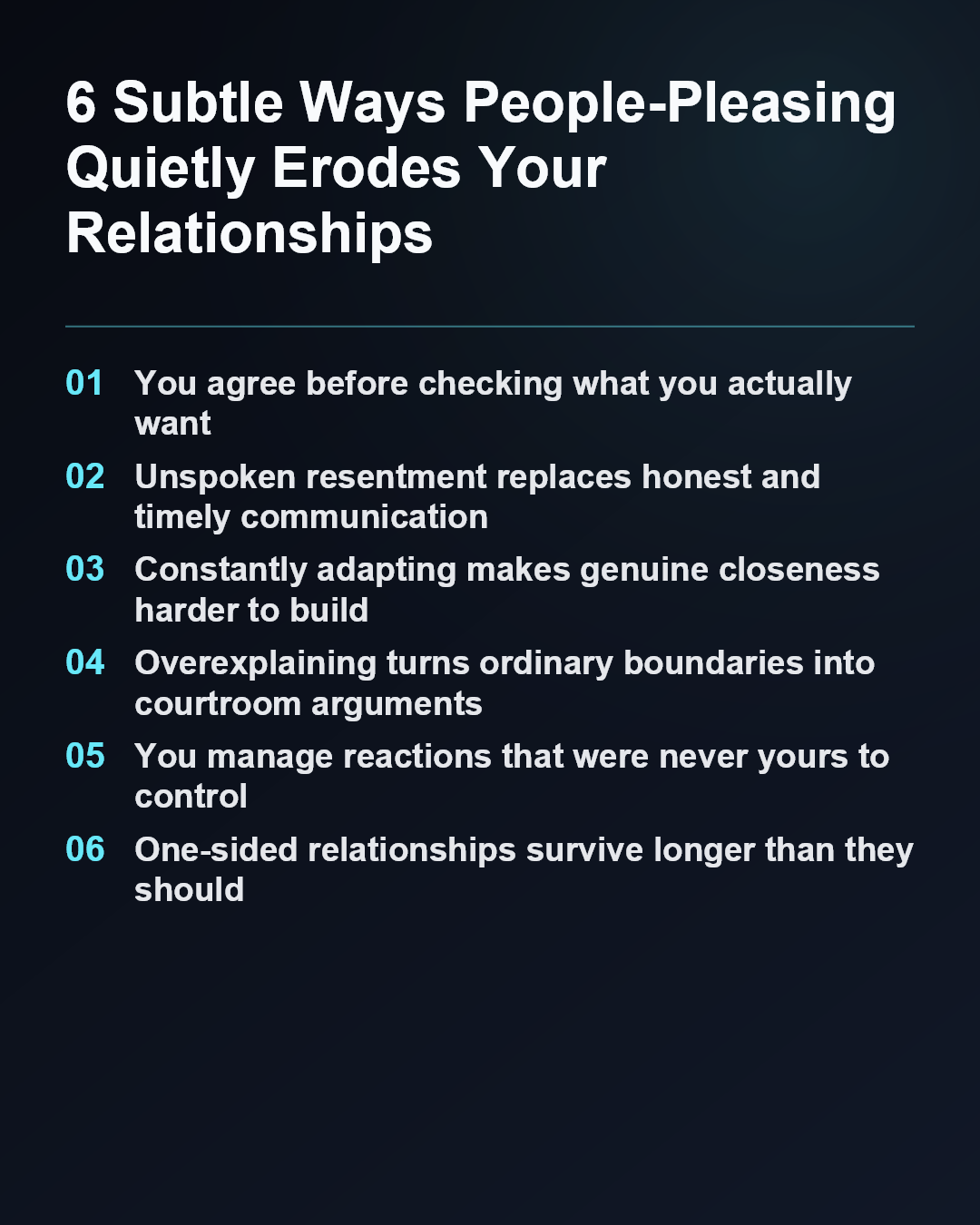
1. You agree before checking what you actually wantAutomatic agreement can look generous, but it often disconnects you from your own preferences. You say yes to dinner, extra work or a family favour before considering your energy, then feel trapped by the commitment.Create a small pause between the request and your answer. A simple “Let me check and get back to you” gives you time to respond honestly. Healthy relationships can usually tolerate a thoughtful answer instead of requiring immediate compliance.2. Unspoken resentment replaces honest and timely communicationWhen you repeatedly hide disappointment to avoid tension, the feeling rarely disappears. It may surface as irritability, withdrawal or anger over something minor. The other person sees the reaction but not the history behind it.Try addressing discomfort while it is still manageable. “I can help today, but I cannot keep doing this every week” is clearer and kinder than silently building a case against someone who may not realise you are struggling.3. Constantly adapting makes genuine closeness harder to buildChanging your opinions, tone or interests to match each person may reduce friction, but it also prevents others from knowing you. They connect with the version designed to please them, while you may feel strangely unseen.Practise revealing low-risk preferences: choose the film, admit you dislike a popular restaurant or respectfully disagree during a conversation. Genuine closeness requires enough honesty for another person to encounter your real tastes, limits and perspective.4. Overexplaining turns ordinary boundaries into courtroom argumentsPeople-pleasing can make a simple no feel as though it needs extensive evidence. You list your workload, family obligations and exhaustion, hoping the other person will approve your boundary. Long explanations, however, can accidentally invite negotiation.A brief answer is often stronger: “I cannot take that on this week.” You can be warm without presenting a defence. The goal is not to make everyone happy with your limit; it is to communicate it respectfully and clearly.5. You manage reactions that were never yours to controlIt is thoughtful to consider other people’s feelings, but taking responsibility for every reaction creates an impossible job. Someone may be disappointed when you decline an invitation, even if you respond with care. Their disappointment does not automatically mean you behaved badly.Ask yourself whether you were honest, respectful and fair. If so, allow the other person to have their response without rushing to reverse your decision. Emotional discomfort can exist without anyone being at fault.6. One-sided relationships survive longer than they shouldPeople-pleasing can keep unequal relationships functioning because one person continually absorbs the inconvenience. You initiate every conversation, accommodate every schedule and apologise first, so the imbalance remains hidden beneath apparent harmony.Experiment with doing less rather than making a dramatic exit. Stop rescuing every plan and notice who follows up, compromises or checks on you. This is not a test or punishment; it is information about whether the relationship can support mutual effort.

Oct 11, 2026
Cindy Crawford and Rande Gerber step out together after son Presley's death New

Cindy Crawford and Rande Gerber step out together after son Presley's death

See more of our coverage in your search results. Cindy Crawford and Rande Gerber were spotted holding hands during a walk on Malibu’s Zuma Beach following the death of their only son, Presley Gerber. The longtime couple was pictured wearing white tops, with the supermodel donning black yoga pants and Rande wearing black shorts. Both wore ball caps and sneakers for the somber outing on Saturday, while Crawford carried a smartphone. The sighting comes a day after longtime family friend — and Rande’s Casamigos tequila brand co-founder — George Clooney called the tragedy “the worst thing that could ever happen with family.”Cindy Crawford and Rande Gerber were spotted on a walk at Zuma Beach in Malibu on Saturday for their first public outing since the death of their only son, Presley Gerber. RMBI / BACKGRIDThey held hands while wearing matching white tops, with Crawford choosing black yoga pants and Rande opting for black shorts. RMBI / BACKGRID“Quite honestly, it’s one of the most devastating things that’s happened to our family,” the “Up in the Air” star told Entertainment Tonight at the Albies Friday.“And their family is just … as you can imagine,” he added.Presley died on Sept. 20 of an apparent overdose just hours after checking into a sober living facility — which he was later seen in footage giving a tour of in the hours prior to his death — Santa Monica.He was 27 years old.The longtime couple also wore black ball caps and sneakers. RMBI / BACKGRIDCrawford was photographed carrying a smartphone during the stroll. RMBI / BACKGRIDA family rep told Page Six the family was asking for “privacy during this very difficult and painful time” shortly after Presley’s death.Sources told Page Six the model checked into Resolutions Living the same weekend he was pronounced dead.Dispatch audio obtained by Page Six indicated that first responders were notified of an “overdose” and “cardiac arrest.”Presley was said to have been found in a bedroom of the sober living facility. Presley, pictured above in a social media photo, died on Sept. 20 of an apparent overdose. Presley Gerber / InstagramThe family, pictured here in a social media snapshot, was said to be “trying to process” the loss. Presley Gerber / InstagramA source told the outlet that, prior to his death, Presley had the support of a 24/7 sober coach who helped care for him. He was ultimately cremated just days after his death, per TMZ.Rande and Crawford married in 1998 and welcomed Presley in 1999. They later welcomed daughter Kaia, now 25, in 2001. A source told Page Six exclusively following their son’s death that Crawford was “inconsolable” and “absolutely devastated.”The family “is still trying to process everything that happened,” they added. Community GuidelinesWelcome to the Page Six Community!Our community is about connecting people through open and thoughtful conversations. We want our readers to share their views and exchange ideas in a safe space.In order to do so, we've created a simple set of rules that will improve your experience.Simply put, keep it civil.Your post will/might be rejected if it contains: Spam Insults, profanity, incoherent, obscene or inflammatory language and threats of any kind Attacks on the identity of other commenters or the article's author User accounts will/might be blocked if we notice: Continuous attempts to re-post comments that have been previously moderated/rejected Racist, sexist, or homophobic comments Attempts or tactics that put the site security at risk So, how can you be a power user? Stay on topic and share your passion. Feel free to elaborate to get your point across. 'Like' or 'Dislike' when you are filled with emotions! Protect your community. Use the report tool to alert us when someone breaks the rules. Thanks for reading our community guidelines. Don't forget, freedom of speech is not the freedom of reach!

Oct 11, 2026
New York’s deer mating season brings 40% of annual crashes in three months New

New York’s deer mating season brings 40% of annual crashes in three months

Horny deer are turning New York roads into a minefield. Deer mating season kicks into overdrive in the fall and that means they’re on the move across Empire State’s highways and byways — causing an estimated 60,000 to 70,000 vehicle collisions each year, according to the New York State Department of Transportation, which launched a new ad campaign to spread awareness.“Deer don’t check traffic. They don’t use crosswalks and apparently their friends give awful advice,” the NYDOT said.The NYSDOT takes a humorous angle to warn motorists about deer. X / NYSDOTRoughly 40% to 43% of these crashes take place from October through December during the peak deer breeding season.But hitting a deer at speeds of up to 60 mph can be deadly. Such crashes kill roughly five people every season.An adult male white-tailed deer — the most common in New York state — typically weighs between 150 and 300 pounds, while bigger bucks can top 350 and sometimes reach 400 pounds.There are about 900,000 deer across New York. The NYDOT offers these safety tips: Scan roads and roadsides ahead at dusk or dawn, when they are most likely to come out. Reduce your speed at night and use high beams when possible. Be sure all vehicle occupants wear seat belts and children are strapped into child seats. New York has a population of roughly 1.2 million white-tailed deer. dpa/picture alliance via Getty ImagesPay attention to deer alert signs. The NYSDOT spends time researching their best locations to keep motorists safe. MediaNews Group via Getty Images Slow down when approaching deer or moose standing near the roadside as they may bolt into the road. Be alert and use caution when traveling through frequent deer crossing areas, which are usually marked with “leaping stag” signs. If a deer does run in front of your vehicle, brake firmly but do not swerve. Swerving can cause a vehicle-vehicle collision or cause the vehicle to strike a pedestrian or a fixed object, such as a tree or utility pole. If you do hit a deer, pull your vehicle to the shoulder away from traffic and turn on your hazard lights, stay buckled up and remain inside. Never go near an injured deer as they are unpredictable and dangerous. Dial 911 if someone is hurt.

Oct 10, 2026
Olivia Culpo and Christian McCaffrey Welcome Son Roman After Keeping Sex a Surprise New

Olivia Culpo and Christian McCaffrey Welcome Son Roman After Keeping Sex a Surprise

See more of our coverage in your search results. Olivia Culpo and Christian McCaffrey’s family just got bigger.The former pageant queen has given birth to her second child with the San Francisco 49ers player.“Roman Augustus McCaffrey 🤍,” Culpo captioned an Instagram post shared jointly with McCaffrey Saturday, noting that their bundle of joy was born Sept. 29.The post included a slideshow of images featuring the new family of four, with both mom and dad holding Roman as well as their 1-year-old daughter, Colette, in full-on big sister mode.Culpo also shared the post to her Instagram Stories, writing, “Heart is exploding.”Olivia Culpo and Christian McCaffrey announced in a joint post Saturday that they have welcomed baby No. 2. Olivia Culpo/InstagramThe couple (pictured above with their daughter Colette on June 6) shared that their newest bundle of joy, Roman Augustus McCaffrey, was born Sept. 29. Instagram/@oliviaculpoThe “Culpo Sisters” alum, 34, told her Instagram followers her pregnancy news in May.“Best birthday gift ❤️,” she captioned maternity shoot snaps with her husband, 30, and Colette.“Baby #2 coming soon 🥹,” Culpo’s caption continued.She and the NFL star chose not to find out their little one’s sex ahead of time — as they did ahead of Colette’s July 2025 arrival.The former pageant queen (pictured above on Aug. 14) revealed in May that she was expecting. Bruce/Javiles / BACKGRIDThe “Culpo Sisters” alum (pictured above on June 16) called her upcoming arrival the “best birthday gift” at the time. oliviaculpo/InstagramShe and McCaffrey (pictured above on April 6) were already the parents of daughter Colette. oliviaculpo/Instagram“It would be really fun to wait,” the former reality star explained to E! News of her decision last year. “It would be such a nice surprise. … Being healthy, that’s all you can ask for.”While Culpo’s “intuition” told her a baby boy was on the way in March 2025, she gave birth to a daughter.McCaffrey and Culpo conceived their second child six months after the latter’s C-section.“I did not think that this was going to happen the way that it did,” Culpo confessed via TikTok in May.The little one (pictured above in September 2025) was born in July 2025. Instagram/@oliviaculpoCulpo and McCaffrey (pictured above on June 8) have been together since 2019. oliviaculpo/Instagram“I am so fortunate to be able to bring another child into the world,” she continued. “Few things that have been running through my mind, cause I just really didn’t plan on this at all.”Culpo was “definitely not totally healed” at the time, explaining to the outlet that she had been just starting to “get [her] groove back.”“I was working out,” she noted. “I could see some abs coming. That’s just not what the body wants right now.“In the beginning, I was like, ‘Oh, my god, can I even do this? Is this allowed? Like, what’s gonna happen?'”The pair (pictured above on June 7) got engaged in 2023. Instagram/@oliviaculpoThe couple (pictured above on June 7) wed in June 2024 and announced the following month that they were starting a family. oliviaculpo/InstagramCulpo started dating McCaffrey in 2019 — and expressed fears before tying the knot over her ability to start a family due to her endometriosis struggles.“I want to have kids, but I want to make sure that I can,” she said in a 2022 episode of her family’s show. “It could be really hard for me to have babies.”McCaffrey proposed in 2023, with the duo walking down the aisle in June 2024 — and announcing that they were expecting the following March. Community GuidelinesWelcome to the Page Six Community!Our community is about connecting people through open and thoughtful conversations. We want our readers to share their views and exchange ideas in a safe space.In order to do so, we've created a simple set of rules that will improve your experience.Simply put, keep it civil.Your post will/might be rejected if it contains: Spam Insults, profanity, incoherent, obscene or inflammatory language and threats of any kind Attacks on the identity of other commenters or the article's author User accounts will/might be blocked if we notice: Continuous attempts to re-post comments that have been previously moderated/rejected Racist, sexist, or homophobic comments Attempts or tactics that put the site security at risk So, how can you be a power user? Stay on topic and share your passion. Feel free to elaborate to get your point across. 'Like' or 'Dislike' when you are filled with emotions! Protect your community. Use the report tool to alert us when someone breaks the rules. Thanks for reading our community guidelines. Don't forget, freedom of speech is not the freedom of reach!

Oct 10, 2026
Florida records 250 local dengue cases as officials highlight severe warning signs New

Florida records 250 local dengue cases as officials highlight severe warning signs

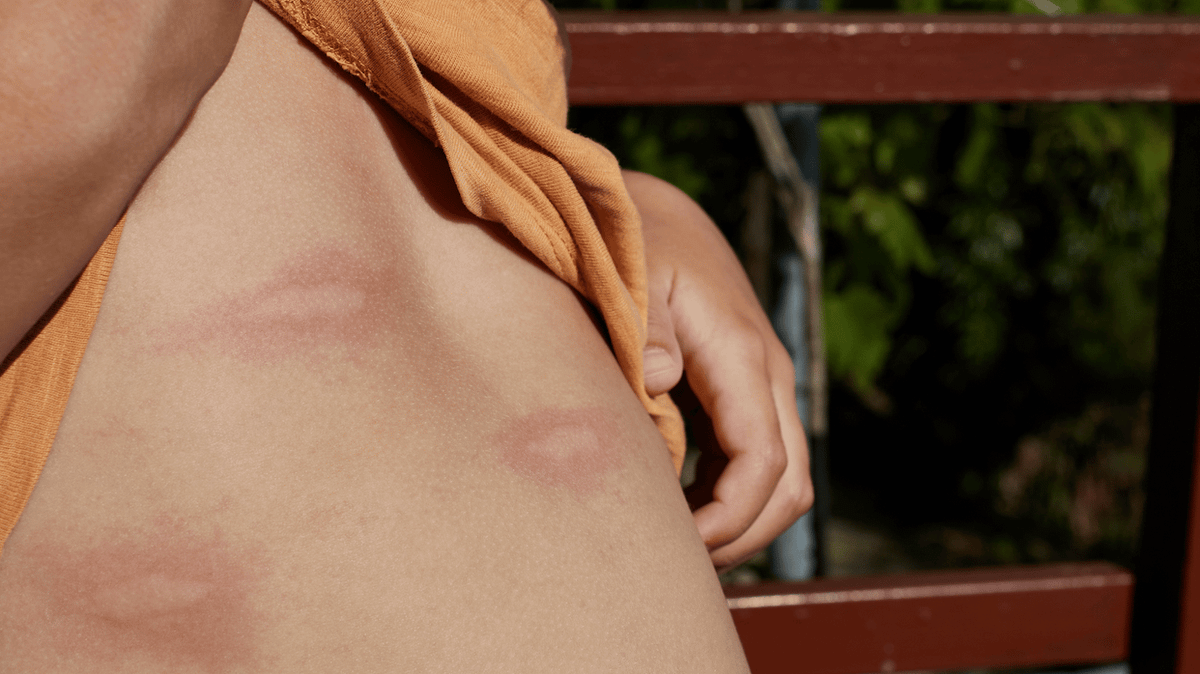
Published 11:18 10 Oct 2026 GMT+1The outbreak claimed the life of an 80-year-old Tampa woman last monthFlorida is experiencing an unprecedented rise of locally acquired dengue fever, with several counties declaring states of emergency as health officials battle to contain the mosquito-borne disease.More than 250 locally acquired cases have been recorded since July, with Hillsborough County and Tampa, accounting for 223 infections.The outbreak has also claimed the life of an 80-year-old Tampa woman who died in September after contracting the virus.According to Florida Health, Dengue fever ‘is a mosquito-borne disease related to the viruses that cause West Nile and yellow fever’.Advert“Dengue fever can be a painful, debilitating disease but is rarely fatal,” it explains.What are the symptoms of dengue fever?(Joe Raedle/Getty Images)The NHS say symptoms usually appear between four and ten days after being bitten by an infected mosquito and can initially resemble flu.Common symptoms include:- A high temperature or fever- Severe headaches- Pain behind the eyes- Muscle and joint pain- Feeling or being sick- Swollen glands- A blotchy rash affecting large areas of the body(Joe Raedle/Getty Images)The health service notes that people tend to recover within one to two weeks, but in rare cases the infection can develop into severe dengue, which can be life-threatening.Warning signs include severe stomach pain, repeated vomiting, rapid breathing, bleeding from the gums or nose, extreme tiredness and blood in vomit or stools.These symptoms can develop as the initial fever begins to disappear and require immediate medical attention.While there is no specific treatment for dengue fever, sufferers are advised to rest, drink plenty of fluids and take paracetamol to ease pain and reduce fever.“Dengue does not spread from person to person. Instead, it requires a mosquito vector (person to mosquito to person),” Daniel Egan, MD, an infectious disease physician at Orlando Health told Infectious Disease Special Edition.(Joe Raedle/Getty Images)“In Florida, we are at an elevated risk compared with other states because of the state’s swampy environment.“The Florida Department of Health updates the community about which counties are seeing more cases. We presently are seeing many locally acquired cases on the western coast of the peninsula.”Dr Egan noted that ‘it remains to be seen how many more cases there will be or how much further it will spread within Florida’.“The most important piece of information would be preventing the spread of mosquitoes,” he added.“Florida is currently in its rainy season. It’s important to remove and drain any sources of freestanding water that could be a breeding ground for mosquitoes.“After storms, this includes buckets, tarps, birdfeeders, and open containers. Anything that gets filled with water after a storm should be emptied out.“When outside, wear long-sleeved clothing and consider using mosquito repellent. Any effort helps reduce the overall risk for mosquito bites and possible illnesses.”Featured Image Credit: Getty Stock ImagesTopics: US News, Health

Oct 10, 2026
9 Ways People-Pleasing Quietly Changes Your Adult Relationships New

9 Ways People-Pleasing Quietly Changes Your Adult Relationships

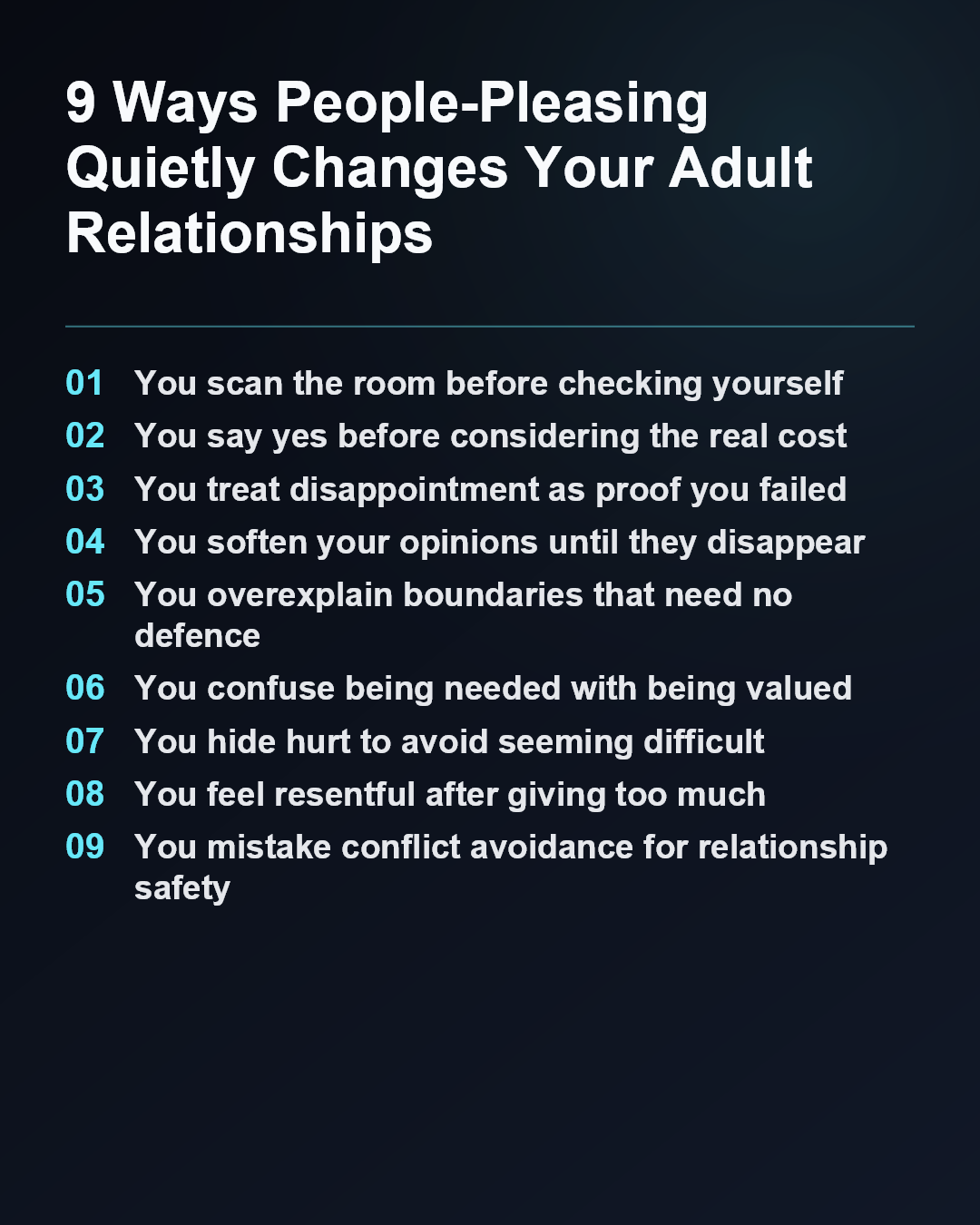
1. You scan the room before checking yourselfWhen you are used to keeping others comfortable, their moods can become your first priority. You notice a partner’s silence, a colleague’s tension or a friend’s disappointment before recognising your own feelings.This awareness can look like empathy, but it becomes costly when self-check-ins disappear. Before responding, pause and ask: “What am I feeling, and what do I need?” That small delay helps you separate genuine care from the reflex to manage everyone’s emotional weather.2. You say yes before considering the real costPeople-pleasing often happens faster than conscious choice. You agree to the extra task, the inconvenient visit or the unwanted favour, then feel trapped by your own answer. Resentment arrives later because your needs were never included in the decision.Try replacing an immediate yes with: “Let me check and get back to you.” The goal is not to refuse everything. It is to create enough space for your answer to become honest rather than automatic.3. You treat disappointment as proof you failedSomeone can be disappointed by your decision without your decision being wrong. Yet people-pleasers may interpret a frown, short reply or change in tone as evidence that they have behaved badly. This can lead to unnecessary apologies and reversed boundaries.Instead of rushing to repair the moment, tolerate the discomfort long enough to examine it. Ask whether you caused harm or simply made a choice another person disliked. Those are not the same thing.4. You soften your opinions until they disappearTo avoid tension, you may dilute what you think with phrases such as “It doesn’t really matter” or “Whatever you want is fine.” Over time, others may stop asking for your preferences because they rarely hear a clear answer.Practise expressing opinions in low-stakes situations: choose the restaurant, disagree about a film or state which time suits you. Having a preference is not controlling. Healthy relationships need access to the real you, not only the most agreeable version.5. You overexplain boundaries that need no defenceA simple no can feel dangerously exposed, so you build a case around it. You provide schedules, personal details and repeated apologies, hoping the other person will declare your boundary acceptable. The explanation then becomes an opening for negotiation.Offer only the context you genuinely want to share. “I can’t make it, but thank you for inviting me” is a complete response. A boundary does not become more legitimate because another person approves of every reason behind it.6. You confuse being needed with being valuedBeing the dependable fixer can provide a strong sense of belonging. People call when they need advice, practical help or emotional support, and usefulness begins to feel like the price of connection. The problem becomes visible when you wonder whether anyone would stay if you stopped solving things.Notice which relationships include curiosity, reciprocity and ordinary companionship. Try offering presence without immediately taking responsibility. Being valued means you can matter even when you are not rescuing, organising or repairing.7. You hide hurt to avoid seeming difficultWhen harmony feels essential, expressing hurt can seem riskier than carrying it privately. You may laugh off a cruel comment or insist everything is fine, only to replay the moment later. The relationship appears peaceful, but the peace depends on your silence.Name smaller hurts before they accumulate: “That joke landed badly for me” or “I felt overlooked.” Clear communication is not an attack. It gives the other person a fair opportunity to understand, respond and adjust.8. You feel resentful after giving too muchResentment is not always evidence that someone else is selfish. Sometimes it signals that you repeatedly offered more than you could give while expecting others to notice the sacrifice. Because the agreement was never spoken, they may not realise a limit was crossed.Treat resentment as information rather than shameful proof that you are unkind. Identify the unexpressed need beneath it—rest, recognition, fairness or choice—then communicate earlier next time. Generosity works better when it is freely chosen and realistically sustainable.9. You mistake conflict avoidance for relationship safetyA relationship without visible disagreement is not necessarily secure. It may simply mean one person has learned to surrender quickly. Real safety includes room for different needs, honest feedback and repair after tension.Start by allowing respectful disagreement without immediately withdrawing or conceding. Pay attention to how the other person responds: curiosity and compromise strengthen trust, while punishment or contempt provide important information. The aim is not constant confrontation, but relationships sturdy enough to hold the truth.

Oct 10, 2026
Dakota Johnson grew her pubic hair for Fifty Shades—and refused a merkin New

Dakota Johnson grew her pubic hair for Fifty Shades—and refused a merkin

Updated 19:03 8 Oct 2026 GMT+1Published 10:49 8 Oct 2026 GMT+1The Hollywood A-lister revealed she refused to wear a merkin while shooting full-frontal scenes in 50 Shades of GreyDakota Johnson has opened up about the lengths she went to for one of her most famous roles - and it involved ditching the razor altogether.The 37-year-old actress admitted she grew out her pubic hair while filming the first Fifty Shades movie, which hit our screens back in 2015, where she appeared fully nude."I grew my pubic hair. For Fifty Shades, the first one, I was full frontal, and she was supposed to have never had a wax," Johnson explained on the latest episode of First We Feast.And when asked if she considered using a merkin instead, Johnson had a very clear answer.Advert"No," she replied without hesitation.While growing out your body hair might not be something you need to do for a movie role, there are actually a few things that can happen when you stop shaving down there.Here’s what you need to know...Dakota Johnson recently revealed she stopped shaving 'down there' for her 50 Shades of Grey role (Universal Pictures)You could say goodbye to razor burnAnyone who's ever shaved their bikini line will know the struggle of razor burn, bumps and the occasional extremely annoying ingrown hair.Stopping shaving means you're less likely to experience irritation caused directly by the razor scraping across your skin.Ingrown hairs can happen when shaved or removed hairs grow back into the skin, potentially causing redness, itching, inflammation and sometimes painful bumps.So, putting the razor down could give your skin a much-needed break.You’ll save yourself some timeLet's be honest, shaving takes time.Whether you're doing a quick tidy-up or embarking on a full DIY Brazilian mission, it's one more thing to squeeze into an already busy routine.Letting your pubic hair grow naturally means you can skip the shaving step altogether - which could save you plenty of time over the course of a month.You could save yourself hours every year if you decide to stop shaving (Getty Stock Images)Your skin may get less irritatedPubic skin can be particularly sensitive, and repeated shaving can cause irritation, especially if you're using a blunt razor, shaving without enough lubrication or going over the same area repeatedly.Giving your skin a break from hair removal may therefore help reduce some of that irritation.Of course, everyone's skin is different, and stopping shaving isn't guaranteed to solve every irritation issue.You might experience fewer ingrown hairsIngrown hairs are one of the less glamorous side effects of hair removal.They happen when a hair curls back or grows sideways into the skin rather than growing normally out of the follicle.Because shaving cuts the hair at the surface, allowing your pubic hair to grow can mean fewer shaving-related ingrown hairs for some people.If you regularly get painful or recurring ingrown hairs, however, it's worth speaking to a healthcare professional.You may also experience fewer ingrown hairs (Getty Stock Images)Your pubic hair can provide a natural barrierNow, in case you're not in the know, pubic hair isn't dirty or inherently unhygienic at all.Like hair elsewhere on the body, it can provide a physical barrier between the skin and the outside world.That doesn't mean pubic hair prevents infections or STIs - it doesn't - but there's also no medical requirement to remove it in order to be clean.Good hygiene comes from washing the external genital area appropriately, rather than whether or not you have hair.You may notice less pigmentation from repeated shavingRepeated irritation and inflammation can sometimes contribute to changes in skin pigmentation, particularly in people prone to post-inflammatory hyperpigmentation.If shaving frequently leaves your skin irritated, stopping could reduce one potential source of that inflammation.However, skin colour variation around the vulva and bikini area is completely normal, and going natural won't necessarily change existing pigmentation.You won't have to worry about the dreaded shaving itch (Getty Stock Images)There may be less friction from shavingA freshly shaved bikini area can sometimes feel particularly sensitive, especially when your skin is rubbing against clothing.For some people, allowing the hair to grow back can make the area feel less irritated.Pubic hair itself can also reduce some skin-on-skin friction, although there's no guarantee that keeping it will make sex more comfortable.Ultimately, what feels best is going to be different for everyone.You don't have to worry about the dreaded shaving itchThe regrowth stage can be seriously uncomfortable.As freshly shaved hair grows back, those short hairs can feel prickly or itchy against your skin and underwear.Letting your hair grow naturally means you can avoid that particular post-shave phase altogether.Whether you prefer completely bare, neatly trimmed or completely natural is a personal choice! (Getty Stock Images)It won't automatically make you smell worseOne of the biggest myths surrounding pubic hair is that keeping it is somehow unhygienic.It isn't.Pubic hair doesn't inherently cause bad odour, and having it doesn't mean you're less clean.Sweat and bacteria can contribute to body odour whether you have pubic hair or not, so regular washing of the external genital area is still important.And if you notice a sudden or unusual change in genital odour, particularly alongside itching, pain or unusual discharge, that's something to get checked rather than blaming your pubic hair.You might simply feel more comfortablePerhaps the biggest benefit is also the simplest: you don't have to remove your body hair if you don't want to.Whether you prefer completely bare, neatly trimmed or completely natural is a personal choice.There's no one 'correct' way for pubic hair to look, and you certainly don't need to grow it out for a movie role like Dakota Johnson did.Sometimes, the best grooming routine is simply the one that makes you feel most comfortable in your own skin!Featured Image Credit: TheStewartofNY/Getty ImagesTopics: Women's Health, Health, Celebrity

Oct 10, 2026
Newsnight panel laughs as Reform councillor cites party inquiry clearing senior aides New

Newsnight panel laughs as Reform councillor cites party inquiry clearing senior aides

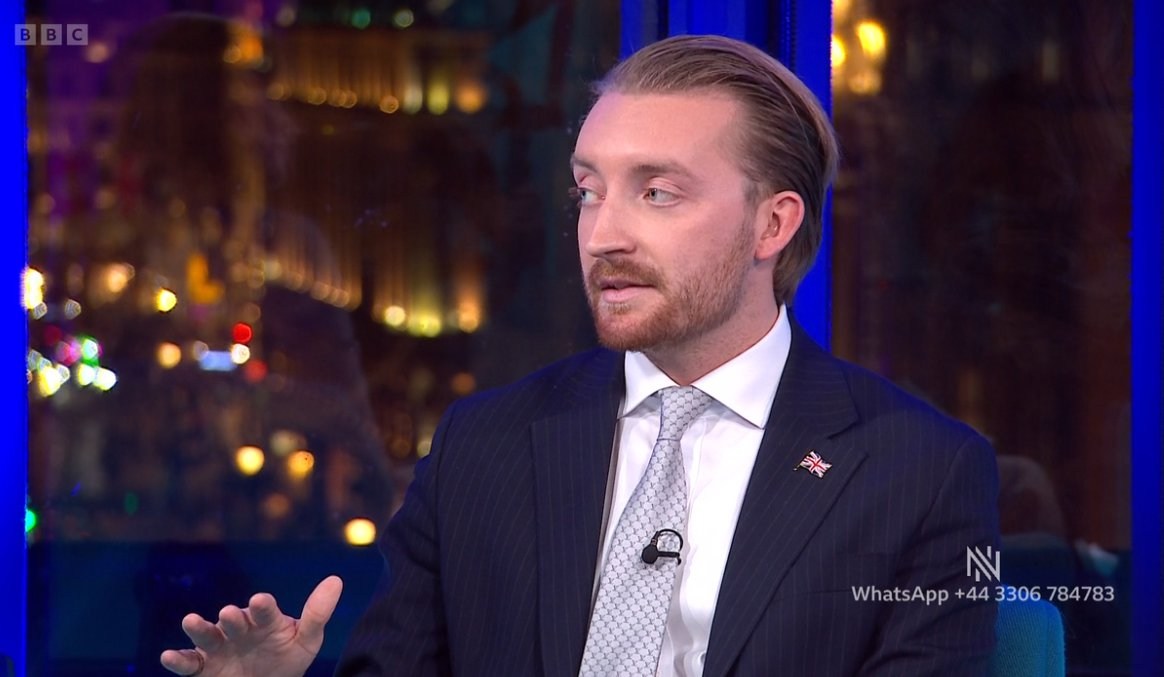
To view this video please enable JavaScript, and consider upgrading to a web browser that supports HTML5 video Up Next Previous Page Next Page A Reform spokesperson who appeared on Newsnight to defend the party’s internal investigation into foreign donations has been branded a laughingstock. Reform UK councillor Jaymey McIvor appeared on the BBC’s flagship current affairs show, where he claimed that his party had been cleared of wrongdoing… by the party itself. Both Nigel Farage’s senior aide Dan Jukes and the party’s head of policy James Orr stand accused of breaking electoral law by discussing potential ways to secure foreign donations. Earlier this week, Reform released an internal report clearing both men; however, the Metropolitan Police is carrying out an ongoing separate criminal investigation into the allegations. On Newsnight, McIvor claimed that the internal report was ‘very, very thorough’ and exonerated both men. However, his fellow panellists Rachel Millward, Richard Bacon and Ruth Davidson could barely contain their laughter at the idea that a report commissioned by Reform could be impartial. The panel discussed Reform UK’s recent internal inquiry (Picture: BBC) McIvor inisisted that the internal report was very thorough (Picture: BBC) ‘I think that actually the 27-page report, which I’ve personally read in full, is very, very thorough,’ McIvor began. ‘It clears the two individuals in question of any legal wrongdoing; no laws have been broken.’ A flabbergasted Bacon interrupted by saying: ‘But it’s an internal investigation… imagine getting arrested for stealing and then you say to the police, tell you what I’ve done an internal investigation’. As Millward laughed, Davidson joined in the mockery, adding: ‘My mum says I’ve done nothing wrong’. McIvor’s claims were laughed at by his fellow panelists (Picture: BBC) As the panellists laughed, Bacon joked, ‘Or people I employ!’ Matt Chorley then attempted to bring some order back to proceedings, asking McIvor to tell the panel why they needed to take the internal investigation more seriously. McIvor then explained that it was the Reform UK secretary and general secretary who investigated the matter. Richard Bacon seemed particularly incredulous (Picture: BBC) ‘They are two individuals I would trust to independently look into something if I were [ever subject to an investigation],’ he added. At this point, as the other three panellists giggled, an incredulous Bacon pointed out that they’re people in the hierarchy of the party.‘They are very, very respected people of the utmost integrity of professional legal background,’ McIvor replied. ‘I have absolutely no doubt that when people read that report, as I have, as I would invite your viewers to read it, and in fact, when people do read it, they will see what I concluded… was that the entrapment and behaviour of Channel 4 and Verbatim is unacceptable, and I really do hope the party does proceed with legal action against them.’ McIvor finished by reiterating that ‘no laws were broken’ by the two men caught in the Channel 4 sting. Davidson said Reform would ‘go nuts’ if another party behaved in this way (Picture: BBC) This caused a burst of outrage, with Bacon once again elbowing the Reform councillor by saying: ‘According to your mates’. At the end of the conversation, Davidson laid out her thoughts on the situation. ‘I just think that if any other political party out there had been accused of [taking illegal donations] and had just cleared themselves… that Reform would have been the first people to go nuts about it,’ she said. The clip has since gone viral on X, with many pointing claiming McIvor’s performance was laughable. To view this video please enable JavaScript, and consider upgrading to a web browser that supports HTML5 video Up Next Previous Page Next Page ‘The other panellists’ uncontrollable laughter at this Reform imbecile is a joy to watch,’ wrote Brendan May on X. ‘Brilliant,’ added Martin Coleman. ‘Let all those who listen to such obvious nonsense see that the world is laughing at them. Joke party. And everyone who falls for this rubbish is a joke, too.’ Meanwhile, Andrew Bunch praised McIvor for ‘keeping a straight face when muttering this embarrassing nonsense.’ Mike H went one step further, explaining that McIvor was ‘destroyed by every Newsnight guest’. Reform denies any wrongdoing with the party’s finances.

Oct 10, 2026
Celiachia, dimostrato in laboratorio il ruolo attivo dell’epitelio intestinale New

Celiachia, dimostrato in laboratorio il ruolo attivo dell’epitelio intestinale

Negli ultimi anni i prodotti gluten-free in vendita sugli scaffali dei supermercati sono aumentati a vista occhio. Il motivo è chiaro: è aumentata la domanda perché sono di più le persone che soffrono di celiachia. Sebbene molti la confondano per una forma di allergia, quest'ultima è una malattia infiammatoria cronica, causata dalla risposta auto-immune che in alcune persone viene innescata dall'ingestione di glutine. Ora un nuovo studio internazionale potrebbe essere davvero vicino ad aver individuato la scintilla che innesca la risposta immunitaria alla base di questa malattia. Questa scoperta - si augurano i ricercatori - potrebbe aprire la strada per la formulazione di nuovi farmaci. Per ora infatti, essendoci ancora molte zone d'ombra sulla comprensione della malattia, le persone celiache non possono fare altro che eliminare tutti gli alimenti che contengono glutine. Solo qualche settimana fa, a fine giugno 2024, è stato infatti pubblicato uno studio su un potenziale principio attivo contro i danni all'intestino, ma si tratta di un farmaco ancora in fase di sperimentazione. Qual è la causa che scatena la celiaca Sono trascorsi circa sei anni da quando un gruppo internazionale di ricercatori, alcuni dalla McMaster University in Canada, altri dagli Stati Uniti, Australia e Argentina, ha avviato questo importate lavoro di ricerca: i risultati, appena pubblicati sulla rivista Gastroenterology, aggiungono un'informazione potenzialmente decisiva alle convinzioni attuali sulle cause della celiachia. "Finora si pensava che la risposta infiammatoria al glutine si verificasse all'interno della parete intestinale e coinvolgesse esclusivamente le cellule immunitarie", spiegano i ricercatori. Invece c'è un altro protagonista alla base della risposta immunitaria, finora rimasto nascosto: l'epitelio intestinale, ovvero il rivestimento interno dell'intestino superiore. Il ruolo dell'epitelio nella risposta immunitaria I ricercatori hanno infatti scoperto che su questo rivestimento c'è una grande varietà di cellule, che pur non facendo parte delle cellule tradizionalmente coinvolte nel sistema immunitario, nel caso specifico della celiachia svolgono "un ruolo attivo nel dirigere la risposta infiammatoria al glutine". Attraverso particolari biomateriali i ricercatori hanno ricostruito in laboratorio un modello biologicamente funzionante dell'epitelio umano: in questo modo sono riusciti a isolare le azione delle singole molecole delle cellule epiteliali e hanno potuto vedere che sono proprio queste ad avvisare le cellule immunitarie e attivare la risposta auto-immune alla base della celiachia. A onore del vero - chiariscono gli studiosi canadesi - questo meccanismo di attivazione della risposta immunitaria era stato già ipotizzato, ma questa è la prima volta che viene dimostrato in laboratorio.

Oct 10, 2026