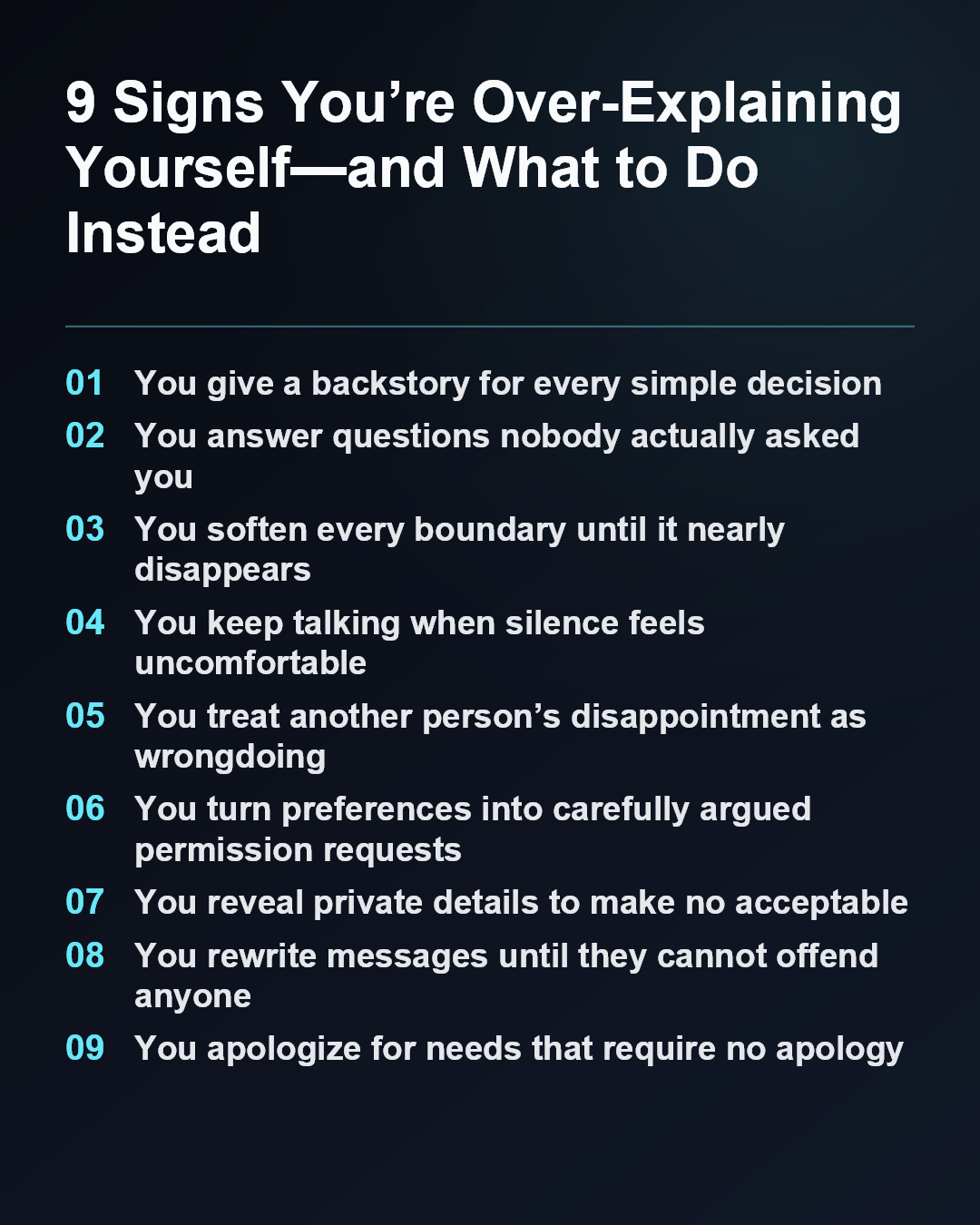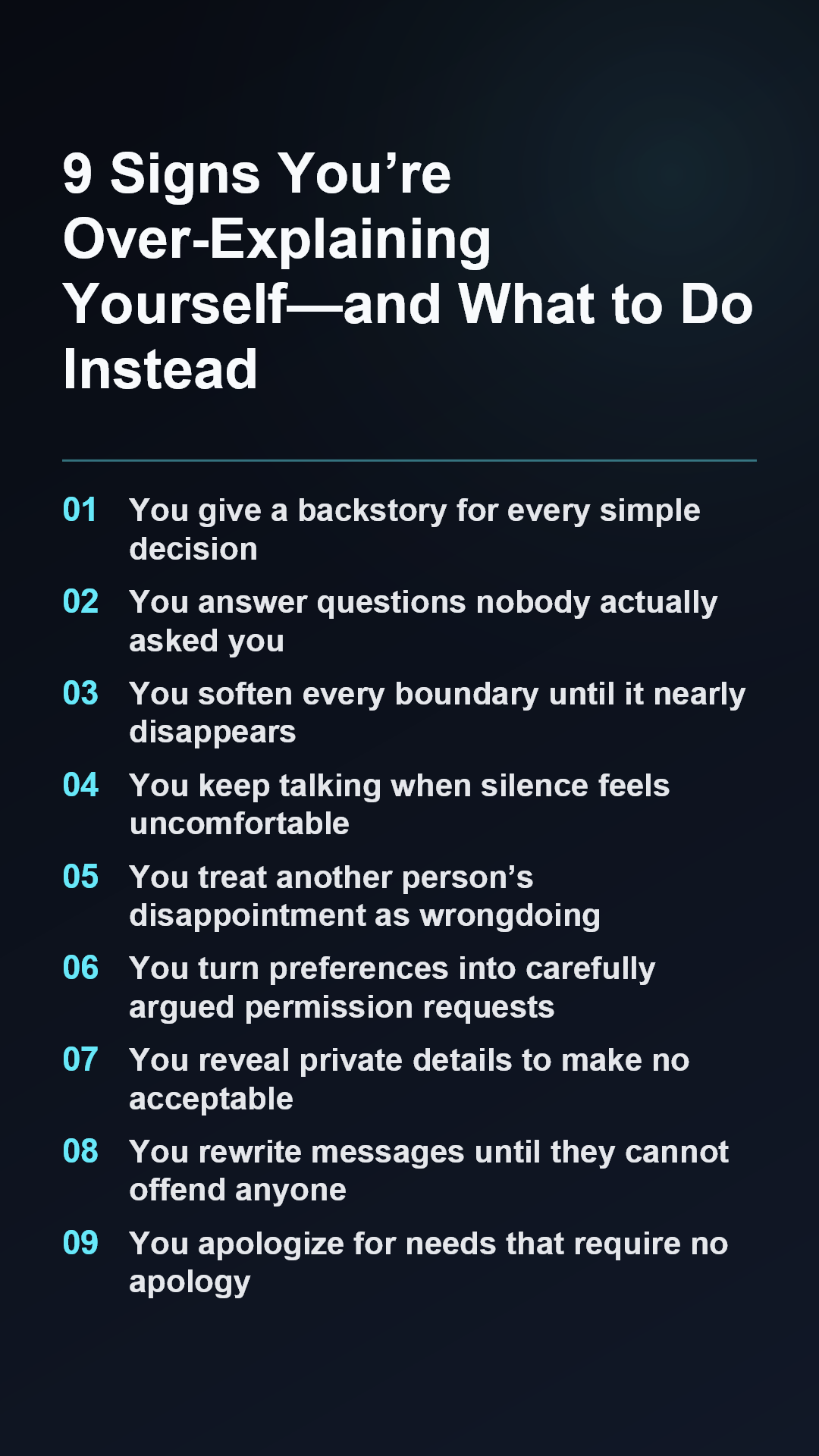
9 Signs You’re Over-Explaining Yourself—and What to Do Instead
You decline dinner, then immediately explain your workload, budget, sleep schedule and family obligations. The extra context may feel protective, as though your decision becomes acceptable only after others approve the evidence.
Try giving the shortest truthful answer first: you cannot make it, but you appreciate the invitation. If someone genuinely needs more information, they can ask. A decision does not require a courtroom-style defense to deserve respect.
A colleague asks whether the report is ready, and you launch into every delay, revision and competing task. Often, the question only requires a status update. Answering imagined accusations can make ordinary conversations feel tense before anyone has criticized you.
Pause and respond to the literal question. You might say that the report will be ready by three. Staying with what was asked helps you notice the difference between another person’s words and your own fear of being judged.
Instead of saying you are unavailable, you apologize repeatedly, offer several alternatives and leave room for negotiation. The boundary becomes so padded that the other person may not realize it is firm.
Warmth is useful, but clarity is kinder than reluctant agreement. Try a brief structure: appreciation, boundary, optional alternative. For example, thank them for thinking of you, say you cannot help this weekend and suggest another resource only if you genuinely want to.
After stating your preference, a few quiet seconds can feel like rejection. You may rush to fill the space with explanations, concessions or a complete reversal. Yet silence often means the other person is simply thinking.
Practice letting your sentence stand. Take one slow breath, relax your shoulders and wait for a response. Tolerating that small discomfort can prevent you from negotiating against yourself and teaches you that pauses are not automatically signs of anger or disapproval.
Someone can dislike your answer without your answer being unfair. Over-explaining often begins when disappointment feels like proof that you have caused harm. You then search for the perfect wording that will remove every negative feeling.
Ask a better question: was I honest, respectful and reasonable? If so, their reaction may belong to them. You can acknowledge it without taking responsibility for fixing it: you understand this is frustrating, but your decision remains the same.
You want a quiet evening, a different restaurant or time alone, but present the preference like a proposal requiring unanimous approval. This can quietly train you to distrust your own wants unless they sound efficient or convenient to everyone else.
Practice naming low-stakes preferences without building a case. Say you would rather eat somewhere quieter or stay home tonight. Preferences do not always need a profound reason; sometimes wanting something different is sufficient information.
To justify declining a request, you may share financial pressure, health concerns or relationship problems you would otherwise keep private. The explanation earns understanding, but it can leave you feeling exposed afterward.
Before answering, ask whether the person needs this information or whether you are offering it to make refusal easier. A simple statement such as that does not work for you protects both the boundary and your privacy. Vulnerability is most meaningful when chosen, not extracted by guilt.
A two-line message becomes a twenty-minute project as you adjust punctuation, add reassurance and remove anything that could sound firm. Thoughtfulness matters, but trying to control every possible interpretation is exhausting and impossible.
Set a reasonable standard instead: clear, civil and accurate. Read the message once from the recipient’s perspective, correct genuine ambiguity, then send it. Your responsibility is to communicate respectfully, not to guarantee that nobody will ever feel uncomfortable.
Apologies are valuable when you have caused harm, but they lose clarity when attached to ordinary needs. Saying sorry for asking a question, needing time or requesting basic respect can frame your presence as an inconvenience.
Replace unnecessary apologies with direct language or appreciation. Instead of apologizing for the delay, thank someone for waiting. Instead of apologizing for asking, state the question politely. This does not mean becoming blunt; it means reserving remorse for moments when repair is actually needed.