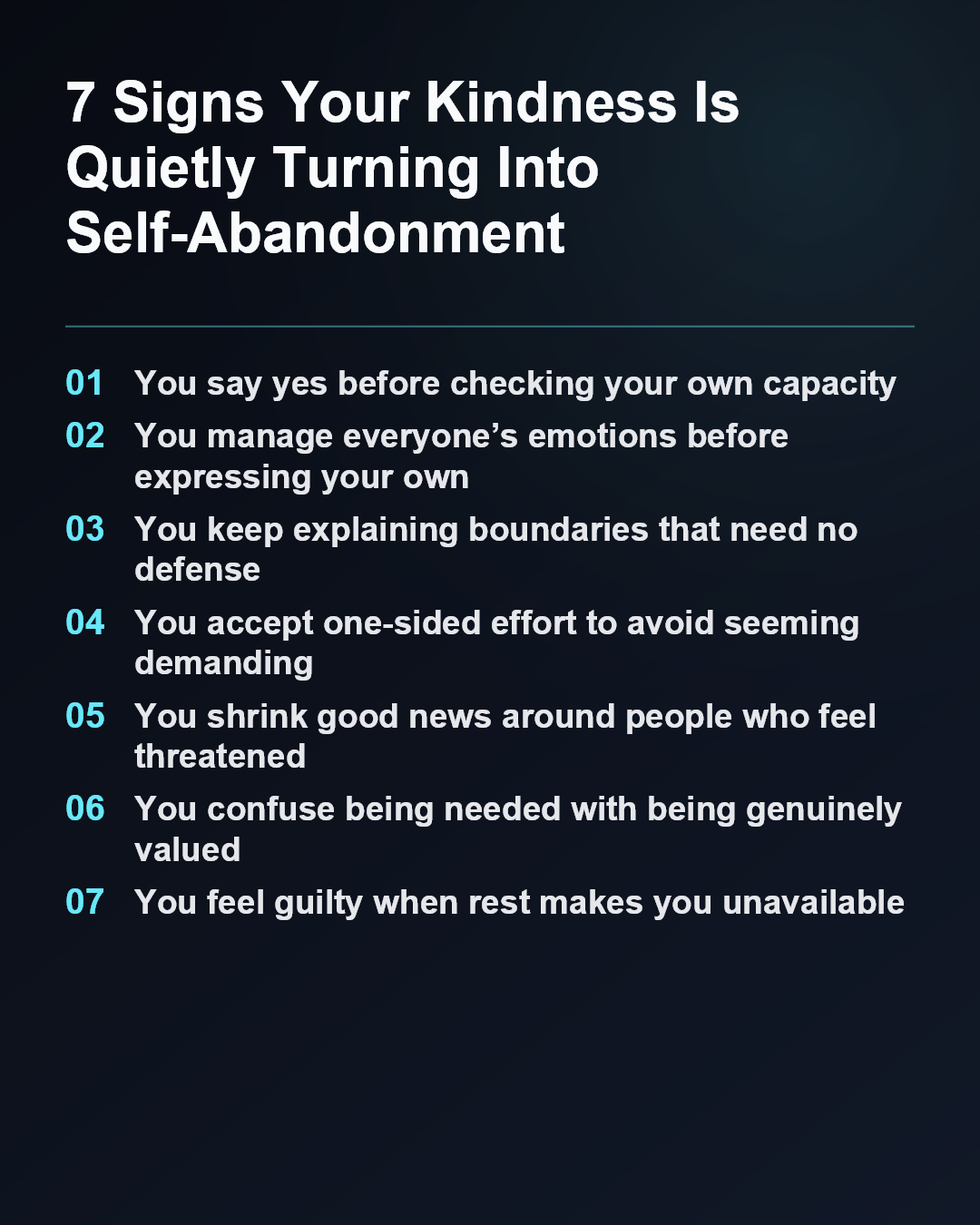
7 Signs Your Kindness Is Quietly Turning Into Self-Abandonment
The automatic yes often arrives before you have considered your time, energy or actual desire. You agree to help, then privately feel trapped or resentful.
Kindness becomes costly when your needs never enter the decision. Before committing, try saying, “Let me check and get back to you.” That brief pause is not selfish or rude. It gives you enough space to offer a sincere yes—or a necessary no—instead of volunteering from reflex.
You may soften every concern, predict every reaction and carefully package disappointment so nobody feels uncomfortable. Meanwhile, the real point gets buried beneath reassurance.
Consider how often you say, “It’s probably just me,” before raising a valid issue. Thoughtfulness matters, but you are not responsible for preventing every difficult feeling. Respectful honesty allows another person to have a reaction without requiring you to erase your experience to make that reaction easier.
A boundary can become a courtroom argument when you believe the other person must approve it. You provide endless reasons, hoping the perfect explanation will prevent disappointment or criticism.
But additional details often create openings for negotiation. “I can’t host this weekend” is complete, even if someone dislikes it. Explain when context supports connection, not because you feel compelled to earn permission. A boundary protects your capacity; it does not require unanimous agreement to be legitimate.
You initiate every conversation, remember every important date and make yourself available whenever the other person needs support. When you need something, however, you minimize it or expect nothing.
Healthy relationships are not perfectly equal every day, but the overall pattern should include mutual care. Notice who responds when you stop carrying the entire connection. Asking for consistency is not being demanding. It is how you discover whether a relationship can support you, rather than merely benefit from you.
You downplay an achievement, change the subject or add self-criticism so someone else will not feel insecure. Their comfort becomes more important than your right to enjoy what happened.
Sensitivity is valuable, but repeatedly making yourself smaller teaches others that your joy is negotiable. Share good news without turning it into a performance or an apology. The people closest to you do not need to understand every ambition, but they should be able to witness your happiness without punishing it.
Being the reliable fixer can create a powerful sense of belonging. People call when they need advice, practical help or emotional rescue, and usefulness starts to feel like proof of love.
The difference becomes visible when you have nothing to provide. Do they still show interest, make room for your feelings and enjoy your presence? Try allowing small problems to remain someone else’s responsibility. You deserve relationships where your value does not depend on remaining endlessly useful.
Rest may feel uncomfortable when you are accustomed to earning your place through responsiveness. A quiet evening can trigger guilt because someone might need you, even when no request has been made.
That guilt is a feeling, not an instruction. Start protecting small periods when you do not answer immediately or solve anything. Discomfort may appear before relief does. Remaining available at all times is not the same as being loving; sometimes it simply means you are never fully present for yourself.